
Whoa! That first reaction was honest. Seriously? A wallet that actually helps you avoid dumb mistakes? My first impression was skeptical. Hmm… but then I used it for a week and my whole feel for browser-wallet UX shifted. Initially I thought it would be another MetaMask clone, but I kept discovering thoughtful little features that changed the flow of transactions and approvals, and I began to trust the UI more than most extensions I’ve used.
Okay, so check this out—Rabby’s design focuses on safety and clarity. Short forms, clear warnings, and approval management that actually matters. I liked that right away. On one hand, the typical browser extension pattern asks you to blindly click “confirm” and move on. On the other hand, Rabby nudges you toward safer choices while still letting power users fine-tune gas and nonce settings. My instinct said somethin’ was different here; the warnings felt earned instead of annoying.
The heart of the appeal is simple. Rabby treats multi‑chain like it’s 2025 already. It supports many EVM-compatible chains in one place, and the network switching is less janky than I expected. The extension surfaces chain context clearly so you don’t accidentally sign a tx on the wrong chain. That saves headaches. Also, there’s a clean token and balance view which matters more than you’d think—when you’re juggling L2s and sidechains, one misread balance and poof…
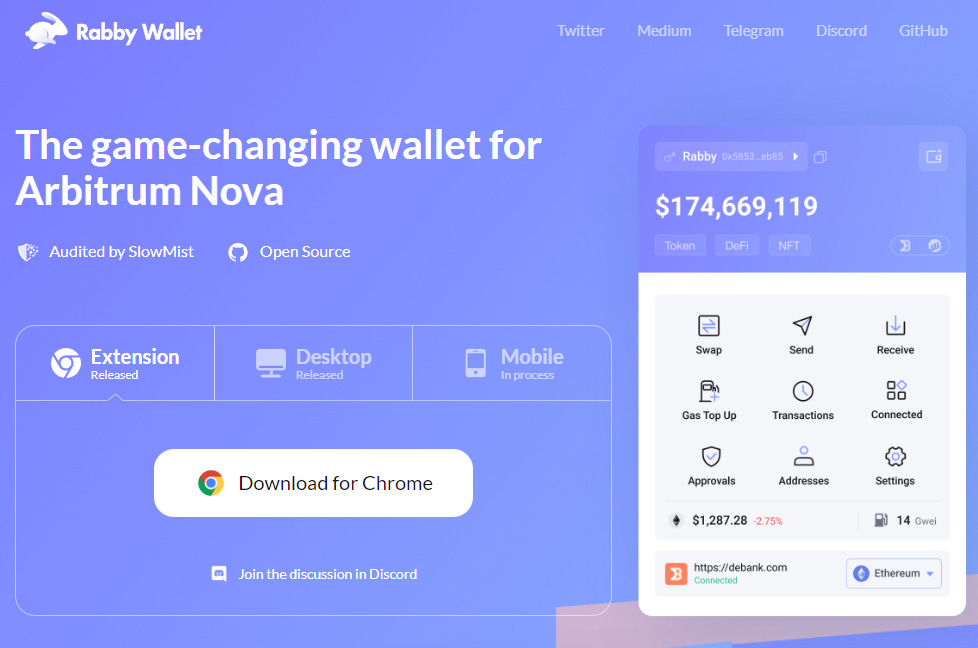
Real features that improved my day-to-day DeFi flow
Here’s what bugs me about most wallets: token approvals are too permissive. Rabby forces you to inspect allowances more deliberately. You can set spend limits instead of handing infinite permission. That tiny change prevented me from giving a shady contract full access to a token I barely used. Seriously, that one feature will save you from common rug-style losses.
Rabby also highlights gas and simulation info before you hit confirm. The simulation isn’t infallible, though—so don’t treat it like a guarantee. But seeing a preflight simulation and the call data helps me spot forged contracts or odd value transfers. Initially I relied on the simulation to feel safe, but then I layered in manual checks and learned to read transaction intent directly. Actually, wait—let me rephrase that: simulation plus basic bytecode awareness = much better than blind clicking.
It hooks up neatly to hardware wallets, which is huge for security-conscious folks. I used a Ledger during higher-stakes transactions. The workflow was a little clunky at first—oh, and by the way, the Ledger prompts can be slow—but overall it was cleaner than some other combos I’ve tried. On the latency front, patience helps; the extra confirmations are worth it when you don’t want to risk a compromised seed phrase.
One thing that pleasantly surprised me: Rabby’s UI treats contract interactions with the respect they deserve. Approvals, permit signatures, and unusual calldata are called out. The extension will flag things so you can ask “Wait, why is it transferring my NFTs?” That kind of questioning is healthy. My friends sometimes shrug off a weird popup; I’m biased, but this part made me feel like I had a second set of eyes on my wallet.
There are tradeoffs, of course. Some advanced DeFi flows require more manual work here than in other wallets that assume full automation. On one hand, that extra friction slows me down. On the other, it reduces stupid mistakes. For me, that’s worth it. Others might find the prompts too chatty. I’m not 100% sure where the line is, but the ability to toggle verbosity helps.
Another practical detail: Rabby supports custom RPCs and common testnets. That made testing new protocols easier. I spun up a local test and then connected a dedicated account in Rabby for trial trades. The separation helped. Also, the extension’s account management is straightforward—create multiple accounts, label them, and use them for specific strategies. Not glamorous, but very very important when you want compartmentalization.
At some point I realized Rabby felt like a toolkit built by people who’ve lost money before. That sounds weird, but experience shows. They added the features you only appreciate after you’ve made mistakes. My gut feeling said this was deliberate. On the flip side, no software is perfect. There were occasional UI quirks, some small delays, and an update that briefly reset a view—minor annoyances, not dealbreakers.
Want to try it? If you’re curious, head for the official download page and install from a trusted source. I recommend checking the permissions it asks for and following the setup flow carefully. If you prefer to download directly, here’s the place I used: rabby wallet. Do the usual security checks: verify the extension ID when you can, and avoid third-party installers.
Workflow tips from my sandboxing experiments:
- Create a “snack” account for small experimental trades, and a cold account for larger holdings.
- Use the allowance manager to revoke old permissions monthly—yes, monthly is obnoxious, but it reduces long-tail risk.
- Pair Rabby with a Ledger for any trade over your comfort threshold.
- Practice reading calldata on small transactions; the learning curve pays off later.
Now for a quick reality check. On one hand, no wallet can substitute for careful due diligence. On the other hand, good tooling reduces human error. Rabby helps bridge that gap by making risky interactions more visible. I found myself catching things I would have missed before. My approach evolved from blind-clicking to deliberate-confirming. That shift matters.
FAQ
Is Rabby Wallet safe to use for large holdings?
Short answer: use hardware wallets for large amounts. Rabby supports hardware integrations which improves safety. Don’t keep life-changing funds in a hot browser extension without additional protections. If you’re comfortable with risk management and use a Ledger or similar device, the combo is solid for active DeFi use.
Does Rabby work with all chains?
It supports many EVM-compatible chains and custom RPCs. Not every chain in crypto-land is covered, but the list is long and growing. If you need a very niche chain, check compatibility first. Also, network settings sometimes change—so double-check RPC endpoints and chain IDs before moving funds.
What bugs me about Rabby?
UI updates can be uneven, and sometimes the prompts feel repetitive. Small bugs pop up after rapid releases. Still, the safety-first defaults outweigh those nags for me. I’m biased, but I prefer a wallet that nags than one that lets you fumble away funds.